
Abstract
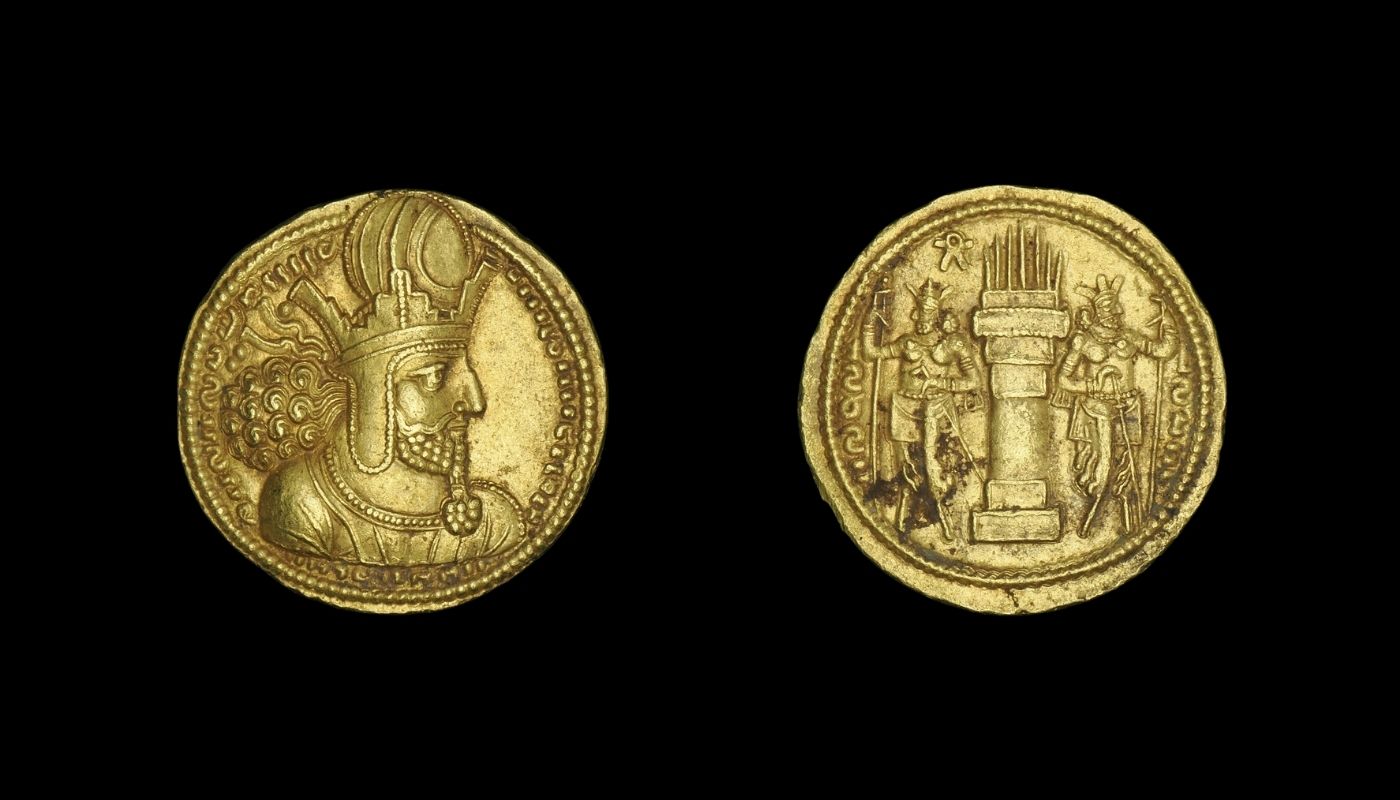
This article offers an in-depth examination of a gold dinar (AV) struck under Shapur I, second ruler of the Sasanian Empire (AD 240–272). Drawing on numismatic typologies, historical texts, and religious iconography, it analyzes the coin’s physical and symbolic components, situating it within the broader context of late antique imperial propaganda and Zoroastrian religious authority. Special attention is given to the obverse-reverse symbolism, minting practices at Ctesiphon, and Shapur’s campaign against the Roman Empire.
Historical Context
Shapur I, son of Ardashir I and heir to the newly founded Sasanian dynasty, inherited a revitalized Persian Empire that had risen in resistance to the declining Arsacid (Parthian) rule. Shapur was notable not only for his administrative reforms and religious policies but also for his decisive military campaigns against Rome.
The capture of Roman Emperor Valerian in AD 260 marked a climactic victory, immortalized in both rock reliefs at Naqsh-e Rostam and in coinage. The issuance of gold dinars under Shapur, though rare, appears to coincide with these monumental achievements and reflects ceremonial or elite financial use rather than circulation currency.
“Shapur’s coins, especially in gold, were never merely monetary, they were state proclamations etched in precious metal.”
— Gyselen, R. (2002). “Sasanian Seals and Inscriptions”

Obverse Iconography
- Portrait: Shapur I faces right, wearing a mural tiara with globe (korymbos) and long, ear-covering flap.
- Shoulder Ornament: Brooch in floral form, typical of high Sasanian elites.
- Facial Features: Heavily stylized eyes, curved mustache, and prominent crown ribbon ties, hallmarks of Sasanian royal busts.
Interpretation:
The mural tiara is unique to Shapur I and served to highlight both urbanity and divine endorsement. The globe/korymbos above his crown suggests celestial sanction, similar in concept to the Roman nimbus but rooted in Zoroastrian cosmology. His exaggerated eye denotes vigilance and power, both earthly and divine.
Reverse Iconography
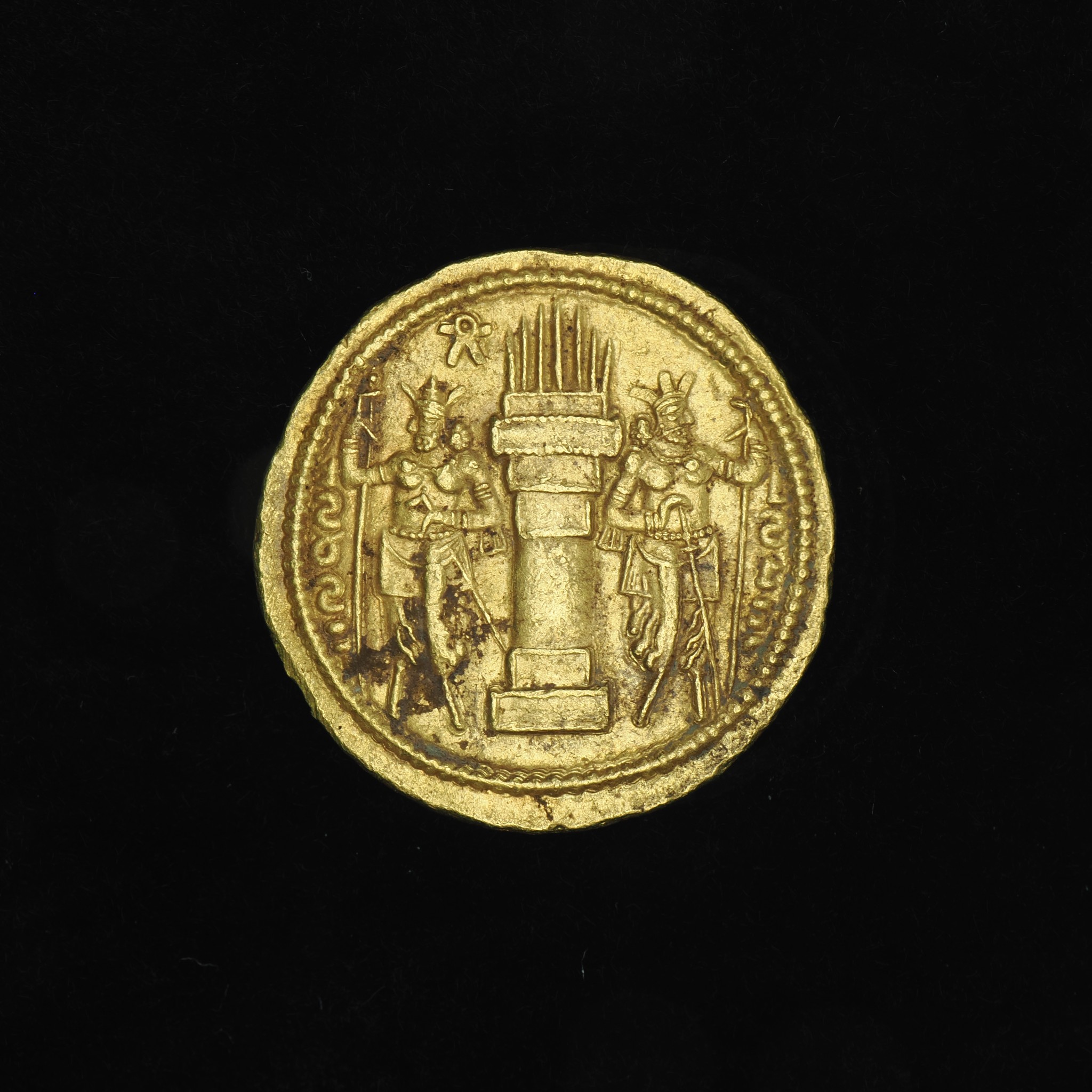
- Central Motif: Zoroastrian fire altar with vertical flames.
- Flanking Figures: Two attendants in mural crowns, each holding scepters.
- Positioning: Symmetrical placement, altar at center, a “sacral axis.”
Interpretation:
This reverse design conveys the Zoroastrian idea of xwarrah (divine glory) and royal legitimacy through fire. The twin attendants, often debated, may represent high Magi or prince-guardians. The scepters reinforce the integration of religious and royal duties, a fusion typical of Sasanian ideology.
Inscriptions and Pahlavi Script
Although gold dinars often lack the full circular legends found on silver drachms, known legends from Shapur I’s coinage typically follow this formula in Middle Persian (Pahlavi):
𐭯𐭠𐭬𐭩 𐭮𐭠𐭯𐭥𐭥𐭧 𐭣𐭠𐭬𐭠𐭭
“Mazdēsn Bay Shābuhr Shahanshah Ērān ud Anērān”
Translation: “The Mazda-worshipping divine Shapur, King of Kings of the Iranians and non-Iranians.”
This inscription, though not always legible on AV dinars due to wear or minimal flan space, affirms both religious orthodoxy (Mazdēsn = worshipper of Ahura Mazda) and cosmopolitan sovereignty.
Minting & Classification
The dinar was struck at Mint I (Ctesiphon), the political and religious capital of the empire. Based on Göbl’s typology (1971), this coin aligns with:
- Type: I/1c or I/1b (Second Phase)
- Die Alignment: 3 h, consistent with late Sasanian standard
- Fabric: Broad flan, shallow relief typical of ceremonial AV issues
The comparative rarity of AV dinars under Shapur suggests non-circulating ceremonial usage, likely for elite payments, temple donations, or diplomatic offerings.
Scholarly References
- Göbl, R. (1971). Sasanian Numismatics. Vienna: ÖAW.
- Gyselen, R. (2002). Sasanian Seals and Inscriptions. Paris: CNRS.
- Schindel, N. (2013). Sasanian Coinage, in The Oxford Handbook of Ancient Iran. Oxford University Press.
- Sellwood, D. (1980). An Introduction to the Coinage of Parthia. London.
- Sunrise Collection (2011). Ancient Coins: The Sunrise Collection Vol. I.
Conclusion
The AV dinar of Shapur I embodies the Sasanian state’s divine ideology, its administrative sophistication, and its cultural synthesis of Persian and Hellenistic traditions. As both an object of art and a document of state, it provides scholars and collectors alike with rare access to an imperial worldview forged in fire, gold, and faith.
Interested in Owning a Coin Like This?
If you’re a collector, researcher, or historian seeking authentic Sasanian material, feel free to contact us directly at info@terranumis.com, or follow us on Facebook @terranumis. You can also explore our curated selection at shop.terranumis.com , where we present only the most thoroughly authenticated and documented pieces.